
Card games have quietly been training brains for centuries, long before “brain training apps” tried to sell you the same idea for a $19.99 monthly subscription. And the science backs it up: shuffling, sorting, remembering what’s been played, and predicting what’s coming next is a workout for your brain that pays off whether you’re 8 or 80.
Let’s explore why a simple deck of cards (or a box of Taco Cat Goat Cheese Pizza) might be doing more for your mind than you realize.
What’s Actually Happening in Your Brain When You Play
Card games look simple on the surface, but your brain is juggling a surprising number of tasks at once. During a single round, you’re likely:
- Holding information in working memory: Like which cards have already been played, or what your opponent might be holding
- Practicing selective attention: Tuning out distractions to focus on the game state
- Building pattern recognition: Spotting sequences, matches, or trends before they’re obvious
- Exercising decision-making under pressure: Weighing risk versus reward in real time
- Strengthening cognitive flexibility: Adjusting your strategy the moment the game shifts
Researchers studying cognitive aging have found that adults who regularly engage in stimulating activities like card games tend to show better long-term cognitive performance than those who don’t. Other work has pointed to card games as a way to keep multiple brain regions active simultaneously, rather than passively absorbing entertainment the way you would watching TV.
The takeaway: card games aren’t just filling time. They’re low-key neural cross-training.
Why Card Games Beat a Lot of “Brain Training”
Plenty of apps promise to sharpen your mind, but card games have a few built-in advantages that a screen struggles to replicate:
- Card games demand sustained focus. Unlike apps designed around quick dopamine hits, card games unfold at a human pace, asking you to track information over several minutes instead of seconds.
- They’re social. Human interaction adds an emotional and communicative layer that solo brain-training apps can’t touch, and social engagement is itself linked to better cognitive health.
- You adapt in real time. No two hands play out the same way, so your brain can’t run on autopilot.
- They’re genuinely fun. Motivation matters. You’re far more likely to stick with a mental workout that makes you laugh than one that feels like homework.
The Benefits Look a Little Different at Every Age
Card Game Benefits for Kids
Card games are often a child’s first hands-on lesson in memory, patience, and following rules, all wrapped up in something that feels like play instead of practice. Simple matching or sequencing games build the foundation for working memory and attention span long before flashcards ever could.
Card Game Benefits for Teens and Adults
Card games offer a rare kind of “active rest” for teens and adults. Life gets loud at this stage of life (between notifications, deadlines, responsibilities, and decision fatigue). A fast-paced card game forces your brain to fully switch tracks. That mental reset, paired with the light strategic challenge of the game itself, is a great way to sharpen focus without adding more screen time to your day.
Card Game Benefits for Older Adults
The benefits move from performance to preservation for older adults. Studies on cognitive aging have repeatedly linked mentally engaging social activities (card games included) to better memory retention and a reduced risk of cognitive decline. Games that mix memory recall with quick decision-making are especially effective because they keep multiple cognitive systems engaged at once.
The common thread for card game benefits across every age group? Consistency matters more than complexity. A quick, silly card game played regularly does more for your brain than an intense mental puzzle you attempt once a year.
Building a Brain-Friendly Game Habit
You don’t need to overhaul your routine to get the benefits; you just need cards on the table more often. A few easy ways to make game night a habit:
- Keep a deck (or a game box) somewhere visible and accessible: You may know the benefits of playing cards and remember how much fun it can be, but until it becomes part of your routine, card games can become “out of sight, out of mind.” Seeing cards on the coffee table, in the kitchen, or in the car for road trips can make it easier to choose game night fun.
- Rotate games: Switching between a memory-based game and a fast-reaction game engages different skills, so your brain doesn’t settle into autopilot.
- Make it social: Invite family, roommates, or coworkers so the mental workout comes with a side of fun and connection.
- Start short: Even 15–20 minutes a few times a week adds up to support memory and focus.
Match the Game to the Skill
If you’re looking for games that lean into specific cognitive skills, this is where the right game choice actually matters. Almost any card game can come with some cognitive benefits, but they don’t all work the same muscle. Here’s how a few Taco Cat Games titles map to different parts of your cognitive workout:
- Oh No Banana Joe!: Built almost entirely around fast visual memory. You’re racing to remember what you’ve seen before someone else beats you to it.
- Taco Cat Goat Cheese Pizza: Trains rapid pattern recognition and reflexes, forcing your brain to process and react before you’ve even finished thinking.
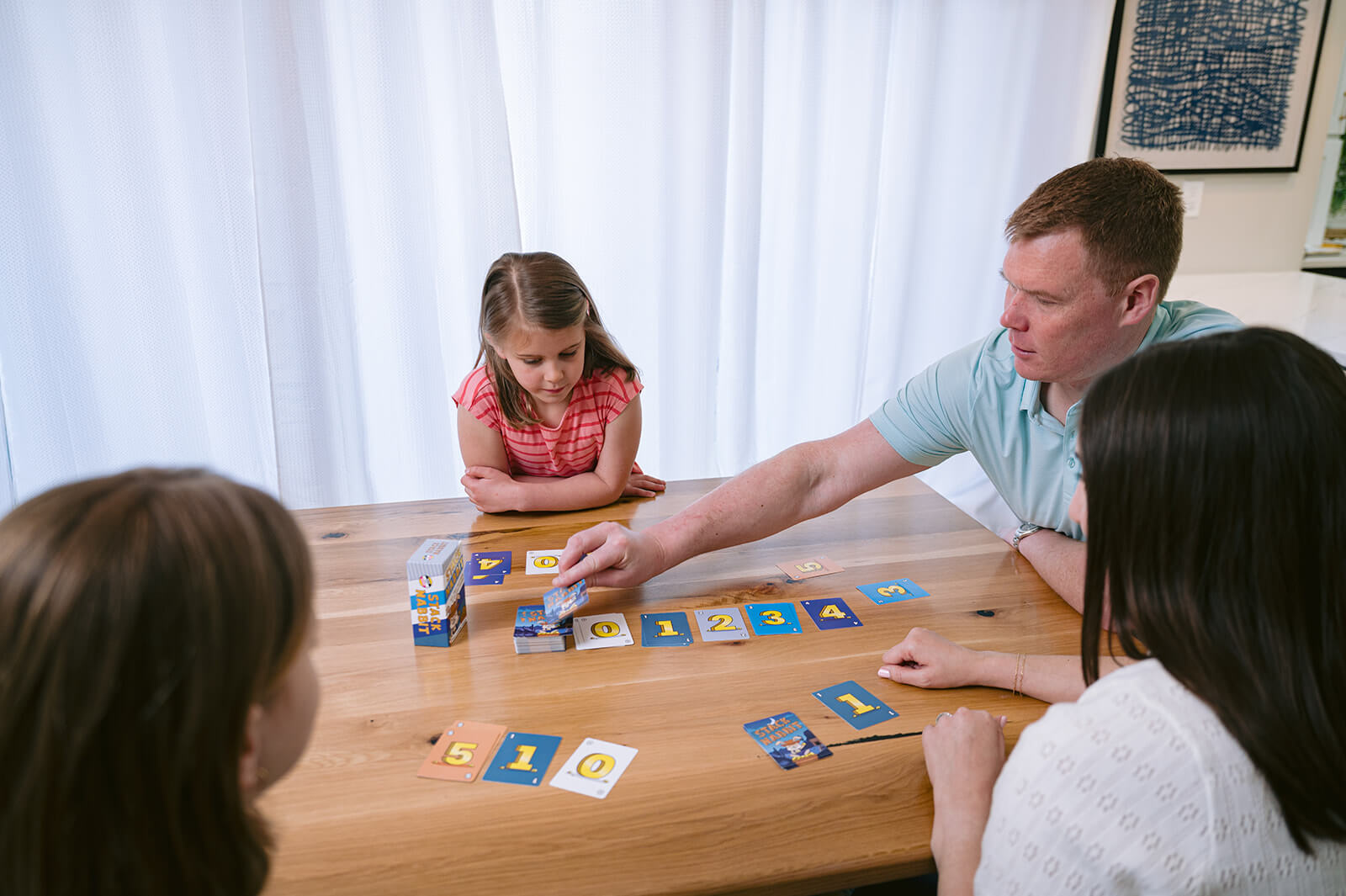
- Stack Nabbit: Blends memory with real-time risk assessment, since every decision to push your luck (or bail) depends on tracking exactly what’s already happened.
- Gimme That!: A stress test for sustained attention. You’re trying to count accurately while dice rolls, distractions, and a stolen pencil disrupt your focus mid-task.
- Steal the Bacon: Sharpens visual scanning and quick matching, rewarding whoever spots the connection first. (Hint: Moose Match Mayhem is another fun choice for these benefits.)
- I Know…You Don’t: Deductive reasoning and pattern recognition train your brain in an exciting race to crack the code and shed your cards.
- Bing! Bang! Boom!: Pure speed and perception training, where split-second recognition beats careful deliberation.
The point is to keep mixing it up, the same way a good workout routine hits different muscle groups on different days.
Work Your Brain with Taco Cat Games
Your brain doesn’t need a subscription service to stay sharp. It needs novelty, social connection, and a reason to pay attention, and a good card game checks all three boxes without feeling like work.
So next time someone suggests “let’s just watch something,” pull out a deck of cards instead. For help building your card game library, you can view the full Taco Cat lineup, explore our bundles, or check out our newest offerings!