

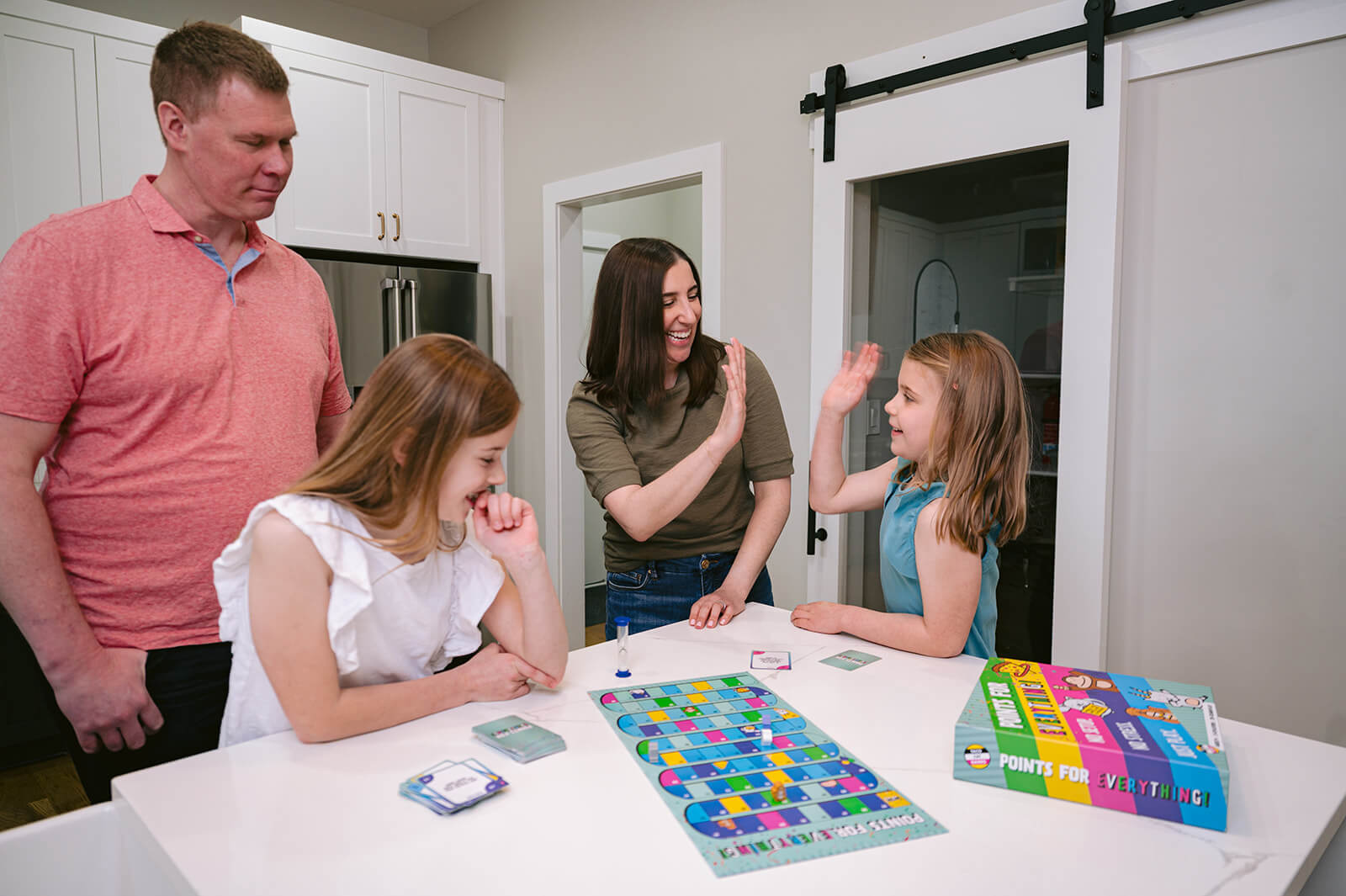
Play is one of the fastest, most reliable ways humans can feel close to one another, and there’s real psychology behind why. A wrong guess, a stolen card, a last-second steal that has everyone yelling at once? These mechanics are built into games specifically to build fun and connection.
We tend to think of games as a way to pass the time. But underneath the shuffling, slapping, and scorekeeping, something much bigger is happening: your brain is building stronger connections with everyone at the table.
What’s Actually Happening in Your Brain During Game Night
A lot of what makes games feel so good isn’t just “fun” in an abstract sense; it’s measurable. Here’s a quick look at what’s firing when the cards come out:
- Oxytocin is released during cooperative and playful social contact, which is the same chemical tied to trust and closeness in relationships.
- Shared laughter synchronizes people emotionally, almost like a group exhale, lowering stress in everyone at the table at once.
- Eye contact and quick reactions activate mirror neurons, helping people read and respond to each other’s emotions faster than words alone ever could.
- Small wins trigger dopamine, which is part of why even a silly win feels genuinely satisfying.
Imitation, Description, and Connection at Play
When paired with the right sportsmanship lessons, game nights create the perfect opportunities to acknowledge the good in those around you, which can help them feel seen and reassured. Even small statements can build big connections, including:
- “You were quick with that round.”
- “That was a clever move!”
- “I liked how you played that card.”
Or maybe someone uses a funny voice when chanting Moose! Match! Mayhem! And quickly everyone around the table is doing the same. By your second or third game night, you can’t imagine saying it any other way.
According to the CDC, imitating and describing the actions of others (which often happens naturally during game night) is key to supporting connection and self-confidence. These are especially powerful for young children, as they are still working to understand their place at the table and how they are perceived by others.
This kind of connection doesn’t require a fancy game or hours of setup. It just requires people paying attention to each other, which is something games are uniquely good at forcing us to do.
Games Create a Safe Place to Take Small Risks
Games let us practice conflict without any real stakes. Someone slaps the wrong card, gets caught bluffing, or loses badly, in front of everyone. In the real world, these kinds of mistakes can come with consequences. However, at the game table, they turn into laughs, lessons, and the stories everyone retells for years.
A little friendly tension followed by resolution is how trust is built. Researchers have found that this cycle (mild conflict, quick recovery, and shared relief or laughter) is one of the very mechanisms that makes people feel closer afterward. These lessons and confidence can also carry over into improved conflict management when stepping back into the real world.
Not All Games Bond People the Same Way
When feeling more connected is your goal, the type of game you play matters. For example, intense strategy games (looking at you, chess) can still make you feel good by getting your gears moving. However, they don’t have the kind of built-in mechanics that turn strangers into friends.
Games tend to build connection fastest when they include:
- Fast rounds, so there’s more shared experience packed into less time.
- Simple rules, so no one’s mentally checked out or trying to remember how something works rather than enjoying the time together.
- Low stakes, as it can be harder to feel lighthearted and open to connection when money is on the table (literally or figuratively).
- Reaction-based or social elements, which force players to interact, not just look at their hand.
- A little unpredictability, since surprise is what often generates the big laughs, shared reactions, funny stories, and fond memories.
- Low barriers to entry, so a seven-year-old and a grandparent can compete on equal footing.
This is really the whole design philosophy behind games like Taco Cat Goat Cheese Pizza; they’re built to get everyone reacting, yelling, and laughing within the first five minutes.
Games That Help Friends and Families Connect
If you’re wondering where to start, you just need a few reliable games that get everyone reacting at the same time. Some games worth considering include:
- Taco Cat Goat Cheese Pizza: The original slap-happy classic. Simple enough for a seven-year-old, unpredictable enough to trip up the adults, and practically guaranteed to end in laughter (and a little friendly chaos).
- Oh No Banana Joe!: Fast-paced and a little ridiculous, it’s built for big reactions and bigger laughs, which is the kind of game that turns into an instant inside joke.
- Steal the Bacon: Matching, grabbing, and a squishy toy bacon on the line. It’s high-energy and hands-on, which keeps everyone leaning in rather than checking out.
- Gimme That!: A counting game where someone’s always trying to steal your pencil mid-turn. Low setup, high chaos, perfect for mixed-age groups.
- Points for Everything!: A no-prep party board game built around group challenges, so the whole table is playing together, not just waiting their turn.
Best of all, none of these require a strategy guide or a 45-minute setup. The games that build the strongest connections are usually the ones that get everyone playing together within the first minute, not the ones that ask for patience before the fun starts.
Why Game Night Connections Matter More Right Now
We’re living through a moment where in-person connection is getting harder to come by. Screens are convenient, but they’re not particularly good at replicating the specific magic of a group of people reacting to the same surprising thing at the same exact moment.
That kind of synchronized, shared attention is hard to fake, and it’s part of why so many families are actively looking for reasons to put phones down and gather around a table again. While it might feel hard to fight with screen time, 92% of parents say their kids are likely to join in on the fun when they pull out a family game.
A game night doesn’t need a big budget, strict plan, or themed menu (though they can’t hurt if you are looking for a little extra fun). It just needs a deck of cards or a simple board game and a group of people willing to be a little competitive and silly with each other.
Create Connections with Taco Cat Games
Play is connection in its funnest, fastest, and most chaotic form. Every slapped card, every bluff called, every dramatic last-second win is doing quiet psychological work: building trust, releasing feel-good chemicals, and giving everyone at the table a shared story to carry forward.
If you’re looking for new games to build connection with friends and family, explore the Taco Cat lineup. You can also check out our bundles or view our latest offerings to get started today!